


Vaccines do not cause autism in children who receive them, the Institute of Medicine has reported in an unprecedented review of medical literature.
"Our review found no tangible, credible evidence to support a conclusion that the MMR vaccine causes autism," Dr. Douglas Barrett, a member of the IOM’s review committee, said in an interview.
Although the scientific evidence against the relationship is solid, he said, it may not be enough to change entrenched ideology about the vaccine’s safety for children.
"This won’t preclude people from worrying about it or making a claim about it, but there is just no science behind those worries. But our charge was to look at the science and hard evidence, and that evidence is not there," he said.
 © Yarinca/iStockphoto.com
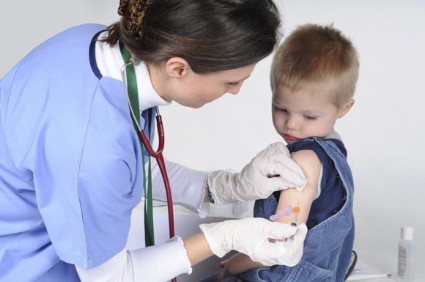
Worry no more, parents; the Institute of Medicine has debunked the idea that the MMR vaccine causes autism in children.
The committee did, however, establish causal links between seven vaccines and 14 other adverse events, including seizures, inflammation of the brain, fainting, and anaphylaxis.
"Many of those findings support vaccine adverse events that are readily apparent, easily identified, or self-limited, transient conditions," said Dr. Barrett, a professor of pediatrics in the division of immunology, infectious disease, and rheumatology at the University of Florida, Gainesville.
The 18-member IOM Committee to Review Adverse Effects of Vaccines was not directed to make practice recommendations regarding vaccine administration. But, Dr. Barrett said, none of its findings is likely to change any current regimen. "However, that is a question for others to decide," he noted.
The report should be "extraordinarily helpful" to practicing physicians who administer vaccines," he said. "They are asked these questions day in and day out by patients relying on their expert opinion about these purported adverse events. This will provide them with today’s best evidence about whether or not there is an association."
The committee examined both epidemiologic and mechanistic evidence to pinpoint true vaccine-related adverse events – a process that highlighted the clinical importance of this interplay. In reviewing the evidence, the committee divided adverse events into four categories: convincingly supported, favoring acceptance, favoring rejection, and inadequate information to accept or reject.
The IOM asked the committee to consider evidence for 79 purported adverse events related to eight vaccines: MMR, varicella, influenza, hepatitis A, hepatitis B, human papillomavirus, meningococcal, and vaccines that contain diphtheria, tetanus or pertussis components.
The evidence convincingly supported the following associations:
• Disseminated Oka varicella zoster virus (VZV) and Oka VZV viral reactivation with varicella vaccine.
• Measles inclusion body encephalitis with MMR vaccine.
• Febrile seizures with MMR vaccine.
• Hypersensitivity and anaphylaxis with MMR, varicella, influenza, hepatitis B, meningococcal, and tetanus toxoid vaccines.
• Syncope and deltoid bursitis with the injection of any vaccine, regardless of antigen.
The committee found evidence that favored acceptance of the following four associations:
• Anaphylaxis and HPV vaccine.
• Transient arthralgia in female adults with the MMR vaccine.
• Transient arthralgia in children with the MMR vaccine.
• Mild, temporary oculorespiratory syndrome with certain trivalent influenza vaccines used in Canada.
The committee found evidence that favored rejecting the following associations:
• Type 1 diabetes with MMR or with the diphtheria, tetanus, acellular pertussis vaccine (DTaP).
• Autism with MMR.
• Asthma exacerbation, reactive airway disease episodes, and Bell’s palsy with inactivated influenza vaccine.
However, the report stated, "The vast majority of causality conclusions in this report are that the evidence was inadequate to accept or reject a causal relationship. Some might interpret that to mean either of the following statements: Because the committee did not find convincing evidence that the vaccine does cause the adverse event, the vaccine is safe. Or, because the committee did not find convincing evidence that the vaccine does not cause the adverse event, the vaccine is unsafe. Neither of these interpretations is correct. Inadequate to accept or reject means just that – inadequate."
The report represents the best currently available information on these vaccines and any adverse events associated with them, Dr. Barrett reiterated. "From my perspective, the process was incredibly rigorous [and] objective, and included significant debate from a variety of perspectives – that of practicing doctors, public health epidemiologists, basic scientists, and people who understand legal systems. So the rigor of the review process, and the care and detail of the analysis was extraordinary."
The report was funded by the U.S. Department of Health and Human Services. None of the authors reported any financial conflicts.